Water Tank Cleaning on the Sunshine Coast – Old Mates Water

Water Tank Cleaning on the Sunshine Coast – Old Mates Water

Water Tank Cleaning on the Sunshine Coast

When was your water tank last cleaned?

If you can't remember, you're not alone, and there's no judgement here. Every week we clean tanks across the Sunshine Coast and Noosa hinterland that haven't been touched in years. Out of sight, out of mind.

But if your family drinks, cooks and showers with tank water, what's sitting on the bottom of that tank matters. A professional clean is quick, affordable, and gives you peace of mind that your water is as clean as it should be.

What builds up in your tank

Every time it rains, whatever is on your roof and in your gutters washes into the tank. Over time it settles on the floor as a layer of sludge, made up of:

  • Dust, dirt and pollen
  • Leaf litter and organic matter from overhanging trees
  • Bird and possum droppings
  • Insects, and occasionally small animals that find their way in

That sludge is a breeding ground for bacteria. It also gets stirred up every time heavy rain refills the tank or the tank runs low, which is when you notice cloudy water, a funny taste or a smell at the tap.

Signs your tank needs a clean

  • Cloudy, discoloured or brown water
  • An earthy, musty or rotten-egg smell
  • Grit or sediment in the glass, the kettle or your filters
  • Filters clogging much faster than they used to
  • Visible sludge on the tank floor when you take a peek through the hatch
  • You can't remember the last time it was cleaned

If any of these sound familiar, it's time to give us a call.

How often should a water tank be cleaned?

Queensland councils recommend checking your tank for sediment every two to three years, and removing it (desludging) if it has built up in line with national health guidance on rainwater tanks.

You may need a clean sooner if:

  • Your roof is surrounded by trees
  • You live near a dirt road, farmland or a building site
  • An animal has got into the tank
  • Your tank has run very low or dry

Between cleans, keep gutters clear, keep inlet screens and first-flush devices maintained, and trim back overhanging branches.

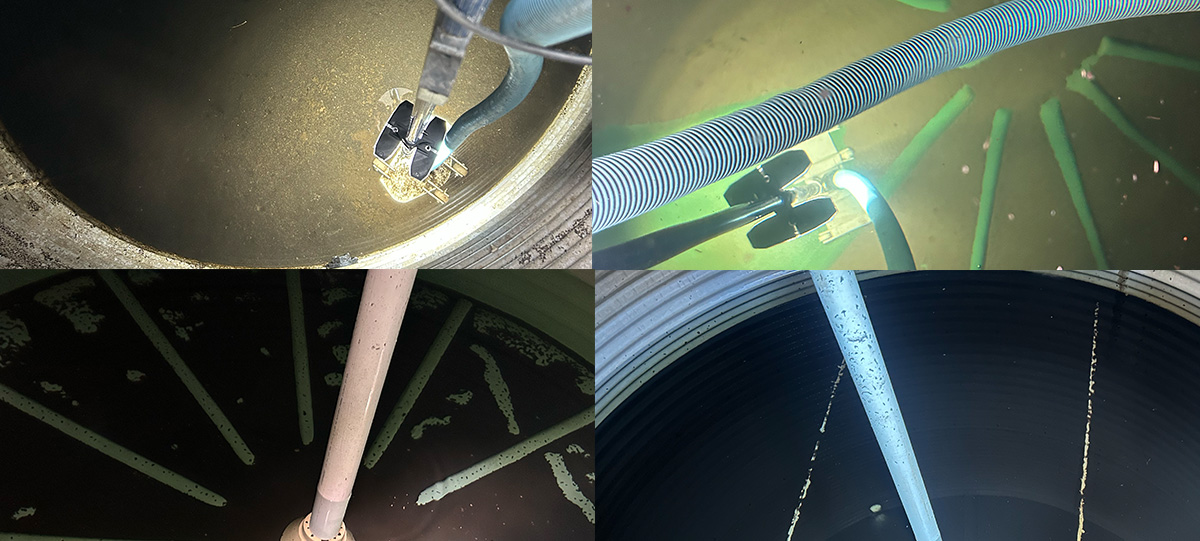
How we clean your tank

  1. Inspect. We check the tank, inlets, screens and overflow, and let you know about anything that needs attention.
  2. Remove the sludge. We clean the sediment off the tank floor so it's gone, not just stirred up.
  3. Pump out, if needed. If the water is badly contaminated, we pump it out so you can start fresh.
  4. Sanitise, if needed. We dose the tank with a hydrogen peroxide–based sanitiser made for drinking water tanks.
  5. Refill, if needed. Our trucks deliver clean, potable water sourced from Unitywater, so you're not left waiting on the weather.

You get a fixed price up front, and we can do the clean and the refill in the one visit.

Book your tank clean

Take a peek in your tank. If you don't like what you see, or you can't remember the last clean, give us a call for a no-fuss, fixed-price quote.

‍

‍

Frequently Asked Questions

Does it matter what type of tank inlet I have?
How can I reduce buildup between cleans?
What causes sediment to build up in tanks?
Is the tank safe to use straight after cleaning?
What types of tanks can you clean?
How much does tank cleaning cost?
How long does a tank clean take?
Will tank cleaning waste all my stored water?
Do you have to empty the tank to clean it?
How do I know if my tank needs cleaning?
Why is it important to clean my water tank?
How often should I have my tank cleaned?
What does tank cleaning involve?
Do you clean tanks as well as fill them?